

Visual Capitalist: Health Care Costs As A Share Of Income By State
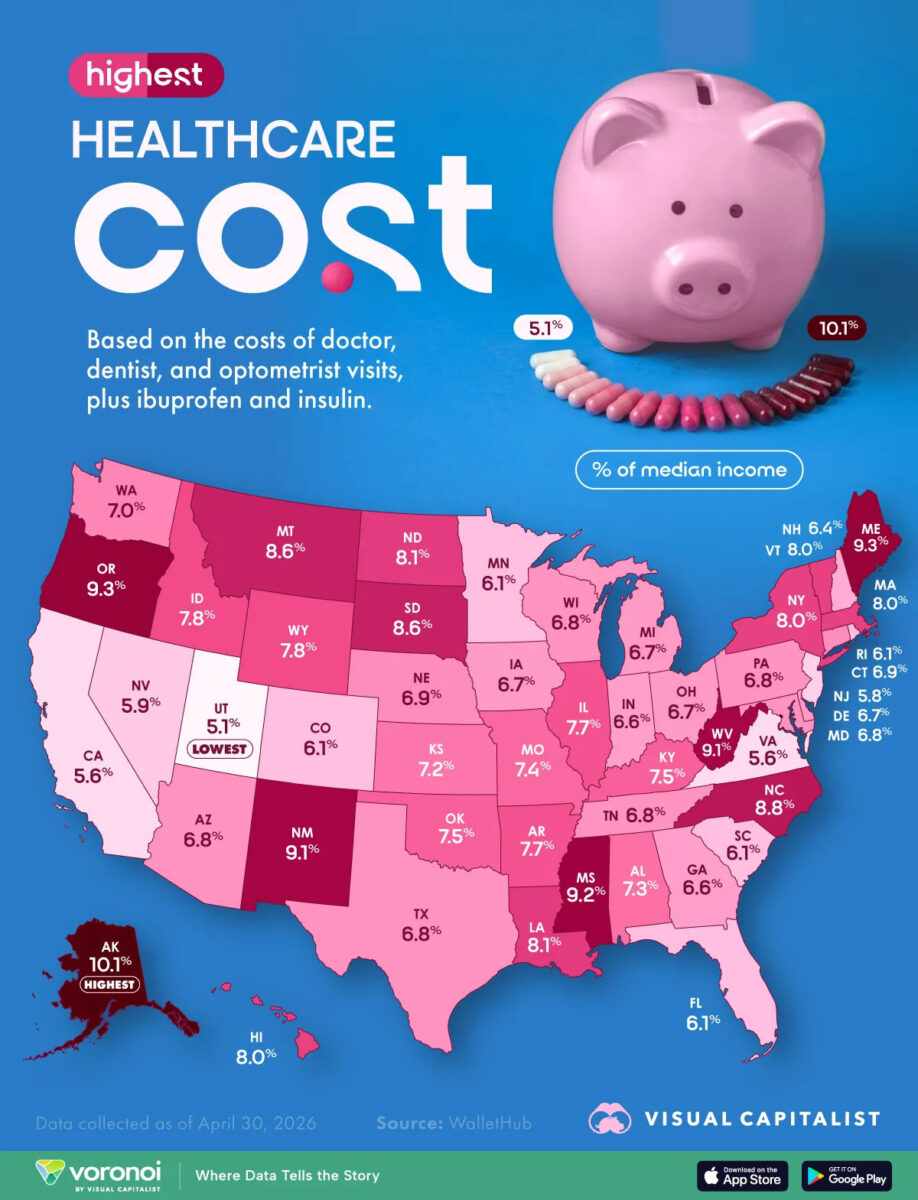
Which States Face the Greatest Health Care Cost Burden?
Health care costs continue to be a significant financial concern for families across the United States. While medical expenses are rising nationwide, the impact on household budgets varies dramatically depending on where people live.
A recent analysis comparing common health care expenses to median household income reveals that some states face a much heavier financial burden than others. The findings show that affordability is influenced not only by medical prices but also by local income levels.
Understanding Health Care Affordability
Health care affordability is often measured by comparing routine medical expenses to household income. Typical costs include doctor visits, dental care, vision care, and common prescription medications.
When these expenses consume a larger percentage of monthly income, households may have fewer resources available for housing, food, transportation, savings, and other essential needs.
The analysis highlights significant regional differences, with residents in some states spending nearly twice the share of their income on health care compared to residents in more affordable states.
States Where Health Care Costs Take the Biggest Bite
Several states stand out for having the highest health care cost burden relative to income.
Alaska ranks among the most expensive states, with residents dedicating more than 10% of median household income toward selected health care expenses. Despite relatively strong household incomes, the state’s geographic challenges contribute to higher costs for staffing, transportation, medical supplies, and access to care.
Other states with a high health care burden include:
- Oregon
- Maine
- Mississippi
- West Virginia
- New Mexico
- North Carolina
- Montana
- South Dakota
- Louisiana
In many of these locations, health care expenses consume a significant portion of monthly household budgets, creating financial pressure for families.
Why Income Matters as Much as Medical Prices
One of the most important takeaways from the data is that health care affordability is not determined by prices alone.
States with moderate medical costs can still rank poorly if household incomes are lower. Conversely, states with relatively high medical prices may appear more affordable when residents earn higher incomes.
This relationship helps explain why some lower-income regions face greater affordability challenges even when health care services are not the most expensive in the nation.
States with Lower Health Care Cost Burdens
At the opposite end of the spectrum are states where health care expenses consume a smaller share of household income.
States such as Utah, California, and Virginia rank among the more affordable locations when comparing medical expenses to income levels.
In these states, stronger median household incomes help offset medical costs, reducing the overall financial burden on residents.
The Bigger Picture
As health care expenses continue to evolve, affordability remains a critical issue for households across the country. The differences between states demonstrate that both income growth and health care pricing play important roles in determining how manageable medical costs are for families.
Understanding these regional trends can help policymakers, employers, and consumers make more informed decisions about health care access, budgeting, and financial planning.
While the cost of care remains a nationwide concern, where you live can have a significant impact on how much of your income goes toward staying healthy.
Read Full Article: https://www.visualcapitalist.com/mapped-health-care-costs-share-of-income-by-state/