

Visual Capitalist: Where Americans Have The Most Deby Per Person
Visual Capitalist: Which U.S. States Carry the Most Personal Debt?
Personal Debt Across America: How States Compare
Americans carry significant amounts of debt, but the average balance varies considerably depending on where they live. From mortgages and auto loans to credit cards and student loans, borrowing levels reflect differences in housing costs, economic conditions, and household financial needs.
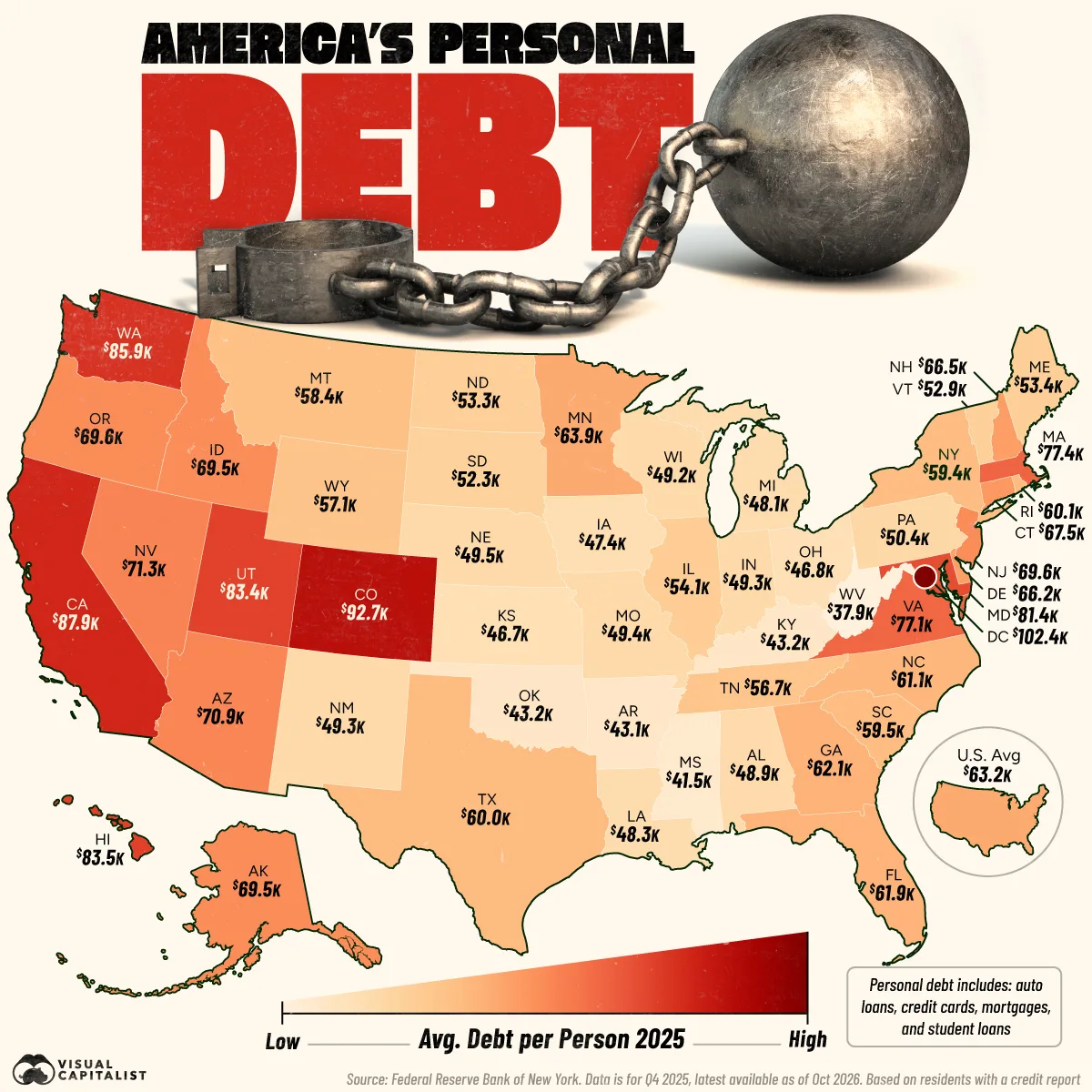
According to a recent Visual Capitalist analysis using fourth-quarter 2025 data from the Federal Reserve Bank of New York, Americans with a credit report carry an average of $63,200 in personal debt.
Where Debt Levels Are Highest
Washington, D.C., leads the nation with an average outstanding balance of $102,400 per person. Colorado follows at $92,690, while California ranks third at $87,850.
Other areas reporting relatively high debt balances include Washington state, Hawaii, Utah, and Maryland.
At the opposite end of the rankings, West Virginia has the lowest average personal debt at $37,850. Mississippi and Arkansas also report comparatively low borrowing levels.
Housing Costs Play a Major Role
Mortgages account for a substantial portion of household borrowing, making housing prices an important factor in explaining differences between states.
In Colorado, mortgage debt represents approximately 78% of average personal debt, compared with 55% in West Virginia.
Nationally, mortgages accounted for roughly 70% of the $18.8 trillion in outstanding household debt at the end of 2025.
States with more expensive housing markets often have larger mortgage balances, which can push average debt totals higher.
Does More Debt Mean Greater Financial Stress?
Not necessarily.
Although outstanding balances provide insight into borrowing patterns, they don’t tell the entire story about household financial health.
Income, monthly payment obligations, interest rates, and repayment terms all influence whether debt is manageable. For example, a homeowner with a larger mortgage secured at a relatively low interest rate may face less monthly financial pressure than a borrower with a smaller balance carrying substantially higher interest costs.
The Bigger Picture
Differences in personal debt across the country highlight the relationship between housing affordability, borrowing costs, and household finances.
While some states carry significantly larger balances than others, understanding the financial impact of debt requires looking beyond the total amount owed.