Election Year Outlook: What a Divided Congress Could Mean for Markets and Policy
Election Year Outlook: A Divided Congress Ahead?
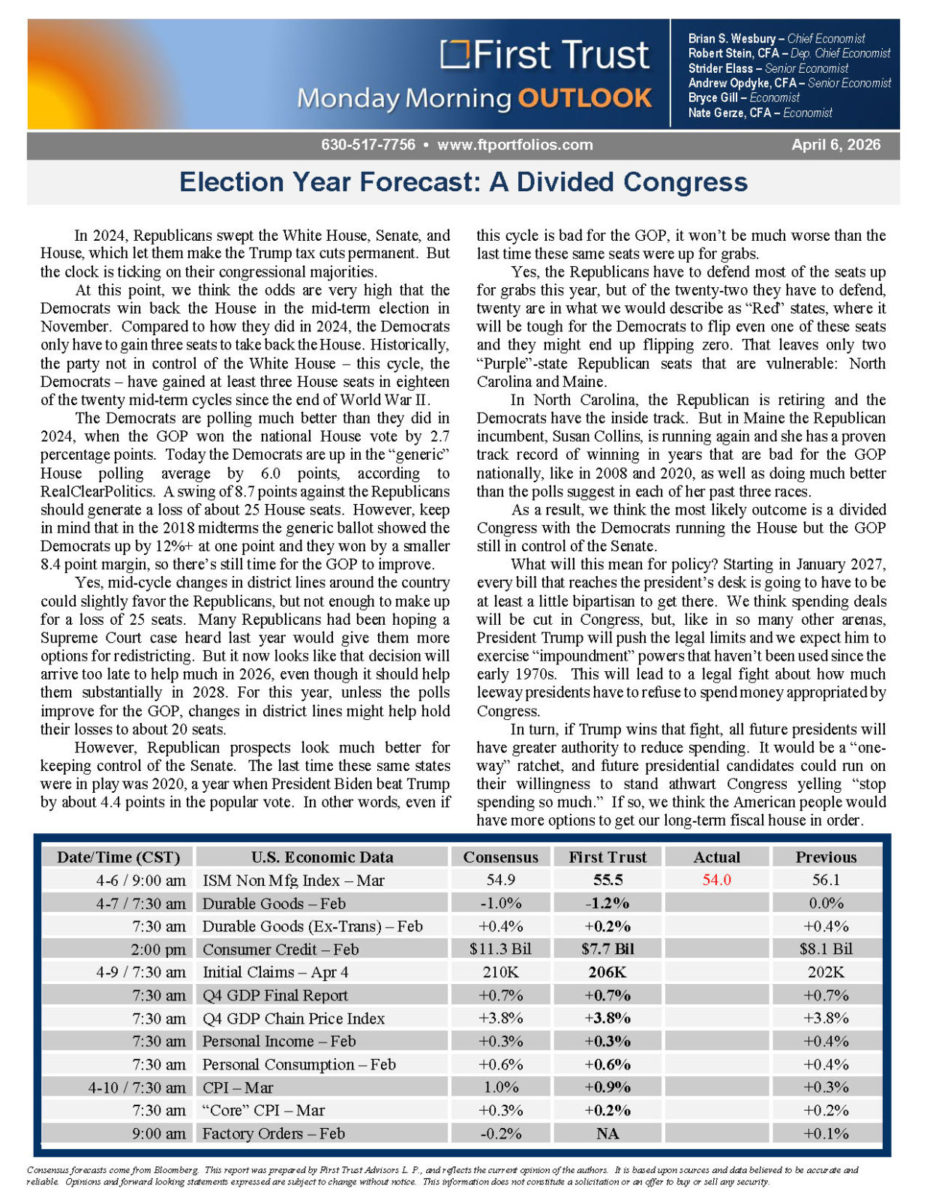
As we move further into 2026, economic data and political trends are beginning to shape expectations for the upcoming midterm elections—and what they could mean for policy, markets, and long-term fiscal stability.
According to recent analysis, the most likely outcome is a divided Congress, with Democrats potentially regaining control of the House while Republicans maintain control of the Senate.
Shifting Political Landscape
In 2024, Republicans secured control of the White House, Senate, and House. However, history suggests that midterm elections often shift power back toward the opposing party.
- Democrats need only a small number of additional seats to regain the House
- Historically, the party not holding the presidency gains seats in most midterm cycles
- Current polling shows a notable shift compared to the 2024 election cycle
While polling can change, these early indicators point toward a meaningful adjustment in congressional control.
Why the Senate May Remain Stable
Despite potential changes in the House, the Senate outlook appears more favorable for Republicans.
- Most contested seats are in traditionally Republican (“red”) states
- Only a small number of competitive (“purple”) states are in play
- Incumbency and past election performance may help maintain GOP control
This dynamic increases the likelihood of a split government.
What a Divided Congress Means for Policy
If the U.S. government becomes divided, major policy changes will likely require bipartisan cooperation.
Key implications may include:
- Slower legislative movement on large-scale policy initiatives
- Increased negotiation around federal spending
- Greater focus on compromise-driven legislation
At the same time, executive authority could play a larger role in shaping policy outcomes.
A Potential Shift in Federal Spending Power
One key area to watch is how future administrations may handle federal spending authority.
There is growing discussion around the use of “impoundment” powers, which would allow a president to limit or delay spending already approved by Congress.
If expanded through legal decisions, this could:
- Shift more control over spending to the executive branch
- Influence long-term fiscal policy
- Become a major issue in future elections
What This Means for Investors and the Economy
A divided Congress has historically created a more stable environment for markets due to reduced likelihood of sweeping policy changes.
However, it can also introduce:
- Uncertainty around budget negotiations
- Delays in implementing new economic policies
- Increased reliance on executive actions
At the same time, ongoing economic indicators—such as inflation, consumer spending, and GDP growth—will continue to play a critical role in shaping market direction.
Looking Ahead
While election outcomes are never certain, current trends suggest that balance of power in Washington may soon shift, bringing both challenges and opportunities.
For investors and businesses alike, staying informed and prepared will be key as political and economic conditions continue to evolve.