

Visual Capitalist: The States Americas Are Fleeing-And Moving To
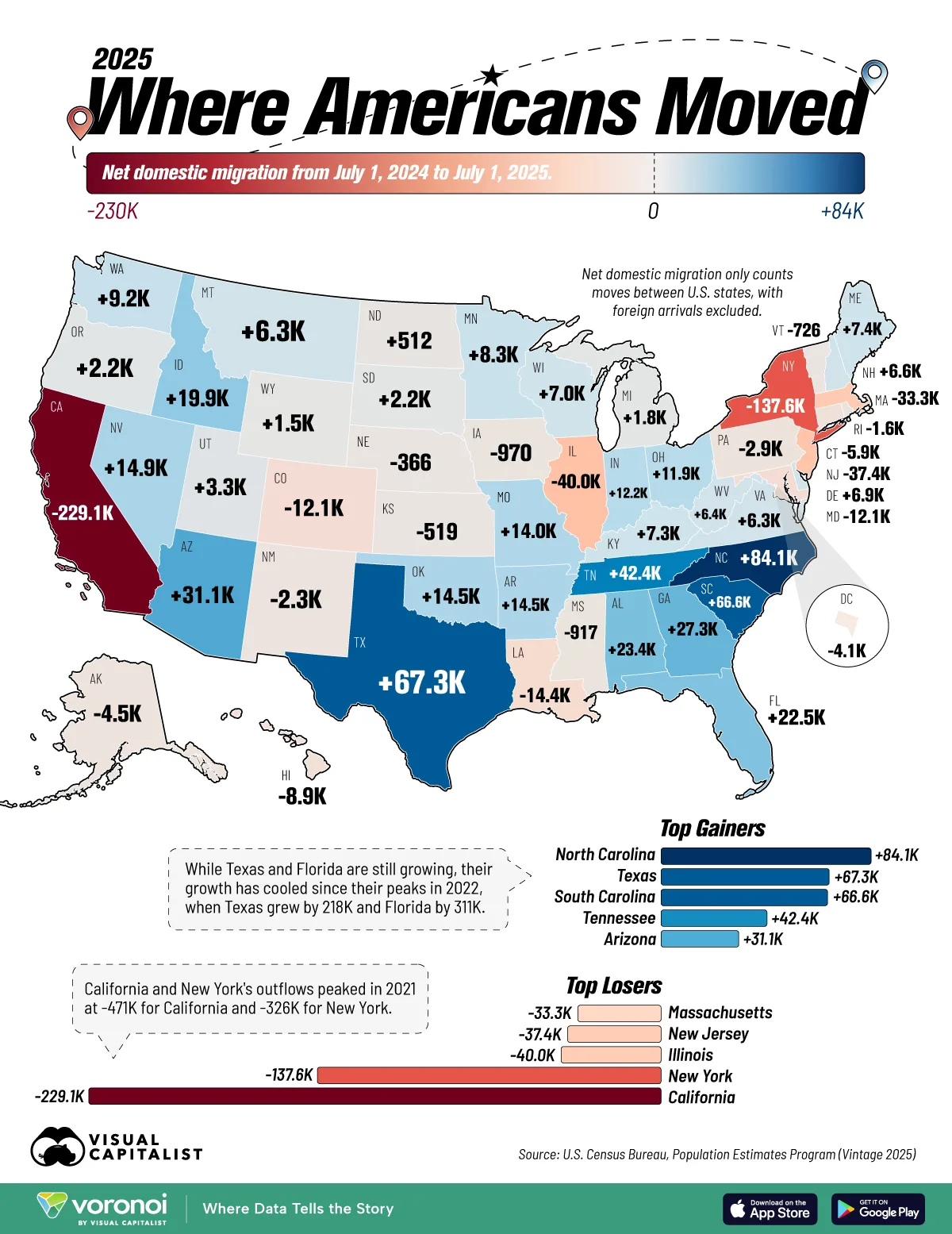
Where Americans Are Moving: Migration Trends Reshape the U.S. in 2025
Americans continue to relocate in large numbers, but the destinations attracting new residents are changing. While Sun Belt states remain popular, rising housing costs and affordability concerns are causing many households to reconsider where they want to live.
Recent U.S. Census Bureau data tracking domestic migration between July 2024 and July 2025 reveals shifting patterns that could have long-term implications for housing markets, labor forces, and regional economies.
North Carolina Emerges as a Top Destination
North Carolina attracted more new residents from other states than any other state in 2025. Strong job growth, a diverse economy, and relatively affordable housing helped make the state a leading destination for families, retirees, and remote workers alike.
Texas and South Carolina also saw substantial population gains, continuing a trend of growth across many Southern states. Tennessee, Arizona, Georgia, and Alabama rounded out the list of states experiencing significant migration increases.
These states continue to appeal to residents seeking lower living costs, favorable business climates, and warmer weather.
Affordability Challenges Impact Traditional Growth Markets
Although Texas and Florida remain among the nation’s top migration destinations, growth has moderated compared to previous years.
Increased home prices, rising property taxes, and higher insurance costs have reduced some of the financial advantages that fueled rapid population growth earlier in the decade. As a result, some movers are looking beyond the most popular Sun Belt markets in search of greater value.
Midwest States Gain Momentum
One of the more notable developments in 2025 was renewed migration growth across several Midwestern states.
States such as Indiana, Ohio, and Minnesota experienced positive domestic migration as more Americans sought affordable housing and lower overall living expenses. Combined with expanding employment opportunities, these factors have made parts of the Midwest increasingly attractive alternatives to higher-cost regions.
For many households, the Midwest offers a balance of affordability, economic opportunity, and quality of life that is becoming harder to find elsewhere.
Population Losses Continue in Some Coastal States
California and New York recorded the largest domestic migration losses in 2025, continuing a trend that has persisted for several years.
While both states remain economic powerhouses, high housing costs and elevated living expenses continue to encourage some residents to relocate to more affordable areas.
Other states experiencing notable population outflows included Illinois, New Jersey, and Massachusetts.
What These Trends Mean
Migration patterns often reflect broader economic realities. Housing affordability, employment opportunities, taxes, and overall cost of living play a major role in where people choose to settle.
As affordability pressures spread across previously fast-growing regions, Americans are expanding their search for value and opportunity. The result is a more diverse migration landscape, with growth occurring across both traditional Sun Belt destinations and emerging Midwestern markets.
Understanding these trends can provide valuable insight into future housing demand, workforce shifts, and regional economic growth throughout the United States.